Investors are increasingly shying away from Eastern Europe
16 June 2026
New greenfield investments announced at their lowest level for six years; investment boom in Romania; Ukraine is struggling, but has great potential; German and Austrian investors cautious; China remains largest new investor in the region
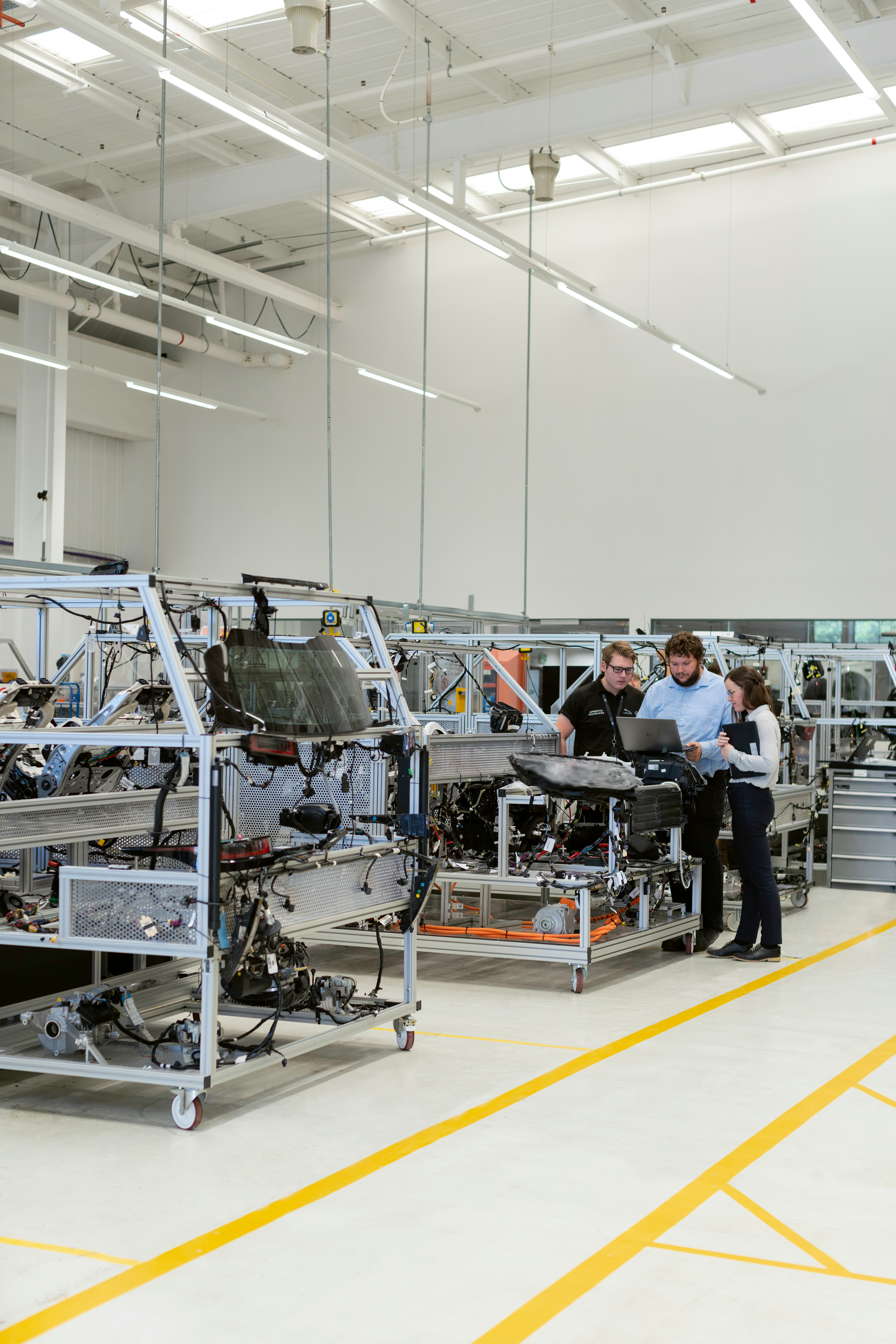
image credit: unsplash.com/thisisengineering
The downward trend in foreign direct investment (FDI) continued in most countries of Central, East and Southeast Europe in 2025. That is the conclusion of a new report by the Vienna Institute for International Economic Studies (wiiw).
Although foreign direct investment in the region as a whole rose from around EUR 75bn in 2024 to just over EUR 91bn last year, this was primarily due to growth in Russia and Romania.
In the case of Russia, FDI picked up again from a very low level. However, this was due to a special effect resulting from the sanctions-driven restructuring of foreign assets held by Russian citizens, who transferred part of those assets back to Russia from offshore destinations. It does nothing to alter the difficult economic environment. Due to the sanctions, there are hardly any new projects from Western investors in Russia.
Romania is seeing an investment boom
Direct investment declined across all sub-regions of Eastern Europe, including the Western Balkans. This also applies to the EU member states of the region, which, however, saw a relatively mild decline in FDI of 2% on average, compared to 2024. Within the eastern EU countries, however, the picture is mixed: while foreign direct investment suffered a massive slump and came to a virtual standstill in Slovakia (-79%), Estonia (-95%) and Latvia (-83%), Romania (+45%), Bulgaria (+32%), Slovenia (+19%) and Poland (+10%) all recorded double-digit growth rates.
‘The sharp rise of 45% in foreign direct investment in Romania highlights the country’s appeal to investors, despite the current economic and political crisis there,’ says Olga Pindyuk, an economist at wiiw and author of the report. In 2025, inflows to Romania were thus almost on a par with those to Czechia, which has been one of the most important destinations for direct investment in Eastern Europe over many years.
Ukraine is struggling, but has great potential
Ukraine, which is under attack by Russia, continues to face a significant decline as the war escalates. Foreign direct investment, which stood at EUR 3.2bn in 2024, fell last year by 29% to just EUR 2.3bn. ‘The war naturally deters foreign investors, even though the country has enormous economic potential. Combined with the prospects of lucrative reconstruction, FDI in Ukraine could therefore boom once the war ends, and there are already early signs of this,’ says Pindyuk, who also serves as wiiw’s Ukraine expert.
New greenfield investment announced is lower than during COVID-19
wiiw expects investment flows into the region to weaken further in the near future. The number of newly announced greenfield projects slumped by 44% in the first quarter of 2026, compared to the first quarter of 2025, while the capital committed fell by 35%. These are the lowest figures for six years. ‘This suggests that foreign investors currently have even less confidence in Eastern Europe than they did at the start of the COVID pandemic and the Russian invasion of Ukraine,’ notes Pindyuk. ‘And the effects of the war in Iran have not yet been fully factored in here,’ she goes on.
However, the decline in foreign direct investment also reflects structural change in the region, particularly in the highly industrialised EU member states. As a result of a sharp increase in wages over the last couple of years there, Western industrial groups that previously produced goods cheaply in the region are moving ever more away from the ‘extended workbench’ model.
German investors are turning away, while Austrian investors are cautious
German and Austrian companies, which are traditionally among the region’s largest investors, are continuing to hold back on new investment. The number of projects announced by German businesses fell between the second quarter of 2025 and the first quarter of 2026, from 213 to 144, compared to the same period in 2024/2025. This represents a decline of 32%. The capital committed to those projects fell by 5% to around EUR 4.6bn, following on from a drop of close to 50% in the previous observation period (2024/2025) – from EUR 9.5bn to EUR 4.9bn.
Investors from Austria made capital commitments of around EUR 1.3bn between the second quarter of 2025 and the first quarter of 2026 – barely more than in the previous period (EUR 1.2bn). In doing so, they announced 35 new greenfield projects in the region. This is in line with the level of the previous four quarters, but well below the number recorded before (49).
China is the largest new investor
The People’s Republic of China remains the largest new investor in Central, East and Southeast Europe. The volume of committed investment almost doubled from EUR 9bn to around EUR 16.5bn, bringing it back into line with the high figure recorded in the 2023/2024 reference period (EUR 18.3bn). ‘A great deal of Chinese money is flowing, on the one hand, into the construction of a production facility for carbon-neutral aluminium in Kazakhstan and, on the other, into the expansion of electric vehicles and battery production in Central and Eastern Europe,’ says Olga Pinduyk.
Despite the high level of new Chinese investment, it still accounts for just over 1% of the region’s stock of foreign direct investment. According to the wiiw database, around 70% still originates from EU countries, primarily Germany.
The new report on FDI in Central, East and Southeast Europe is available on request and free of charge to wiiw members.