Serbia at a turning point: What lies ahead after 14 years under Vučić
25 November 2026
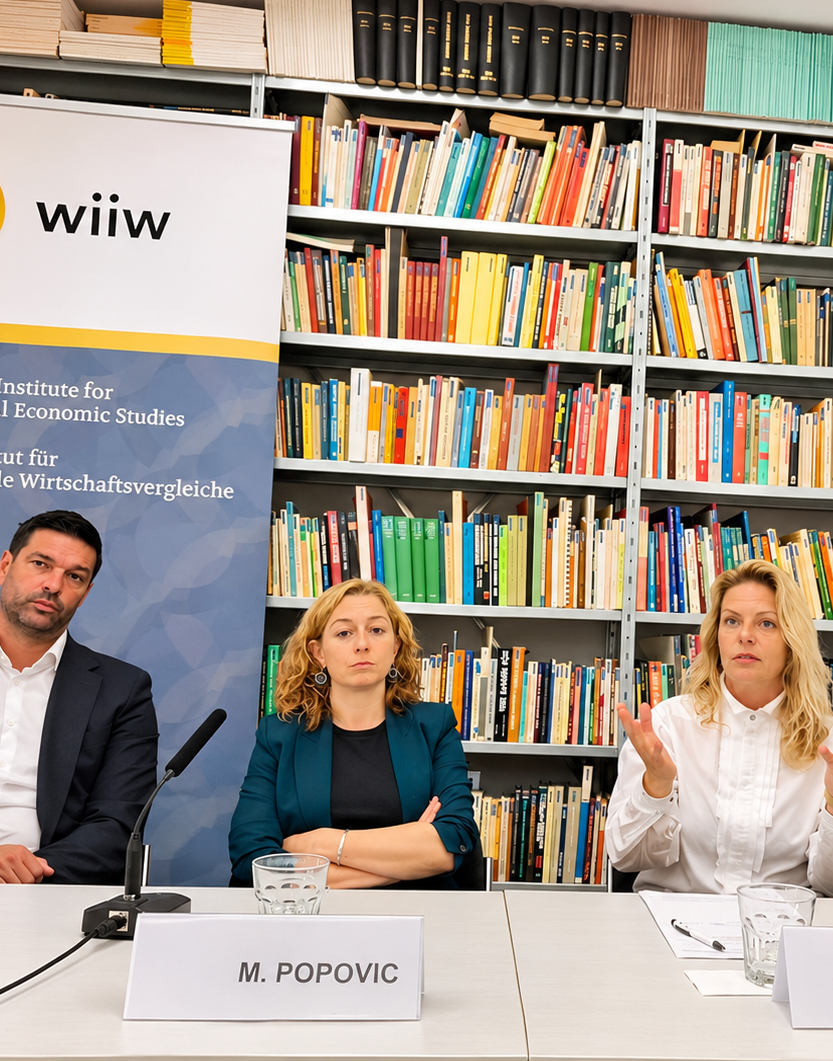
By winning an outright majority on 25 October, Serbia’s Student List removed Aleksandar Vučić from power. Before the vote, a panel discussion jointly organised by wiiw and oiip explored what it would take to turn electoral success into lasting democratic change
image credit: wiiw/Andreas Knapp
By Florian Huber and Andreas Knapp
Serbia’s student-led movement turned nearly two years of protests into a parliamentary majority on 25 October 2026, ending 14 years of rule by Serbian Progressive Party strongman Aleksandar Vučić. The Student List won 140 of 250 seats, while the list led by Vučić secured 103. Vučić had already resigned as president in late September. The new parliament held its inaugural session on 17 November.
Six days before the vote, experts at a discussion hosted by the Vienna Institute for International Economic Studies (wiiw) and the Austrian Institute for International Affairs (oiip) considered whether the movement could challenge the system built under Vučić’s rule. The result gives fresh relevance to a question raised at the event: how can an electoral victory lead to more accountable government and functioning institutions?
Moderated by wiiw Executive Director Mario Holzner, the discussion on 19 October examined the movement’s prospects, the economic grievances behind the protests, and the EU’s contested role.
Opening the discussion, wiiw President Hannes Swoboda recalled how earlier hopes for a more liberal Serbia had faded. The protests offered a fresh opportunity, he argued, but turning that opportunity into change would require various political forces to come together.
oiip Director Cengiz Günay described Serbia under Vučić as a competitive authoritarian regime: democratic institutions formally existed, but those in power used state resources to tilt the playing field against their opponents.
From protest to the ballot box
Hedvig Morvai, Executive Director for Europe and Democracy at the ERSTE Foundation, argued that the 2024 collapse of the concrete canopy at Novi Sad’s train station, which killed 16 people and triggered the protest that turned the students into a political force, had exposed both corruption and institutional failure. Peaceful student protests and occupations of educational institutions subsequently grew into a broad movement.
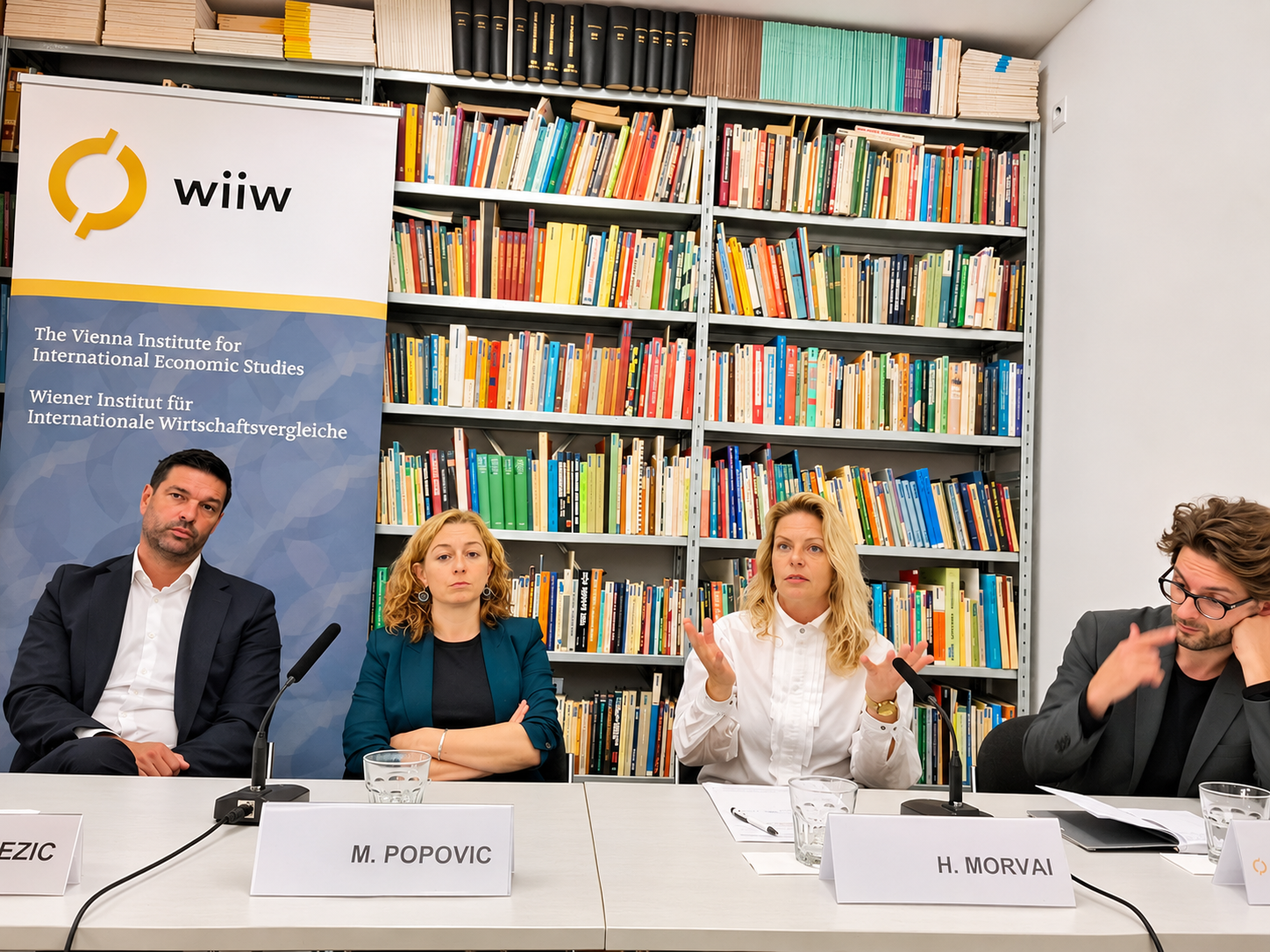
wiiw/Andreas Knapp
Initially, the students sought a response from the Serbian institutions themselves. When none materialised, their demands expanded to encompass democratic renewal and, eventually, new elections.
The movement’s organisation reflected its aims. It operated horizontally, without a leader who could be singled out for pressure. Rather than seeking a prolonged period in government, Morvai explained, the students wanted to establish fair conditions for democratic politics.
They were also working to monitor the vote and reach people across the country. By avoiding divisive policy positions, the movement sought to unite a broad coalition behind the restoration of democratic institutions.
Milica Popović, a senior postdoctoral researcher at the Institute of Culture Studies of the Austrian Academy of Sciences, characterised the election as a referendum on Vučić rather than a conventional contest between parties. Years of increasingly unequal competition had eroded the relevance of ordinary party politics. Marko Kmezić, a researcher at the University of Graz’s Centre for Southeast European Studies, argued that Vučić was facing a serious challenge after more than 14 years in power.
Growth without shared prosperity
The protests also reflected frustration with everyday living conditions. Branimir Jovanović, an economist at wiiw and expert on the Western Balkans, argued that economic growth had failed to deliver the improvements many Serbians had expected. Compared with the rest of the region, the results had been disappointing: inequality had risen and parts of the infrastructure had deteriorated, even though Vučić had been quite successful in building new motorways.
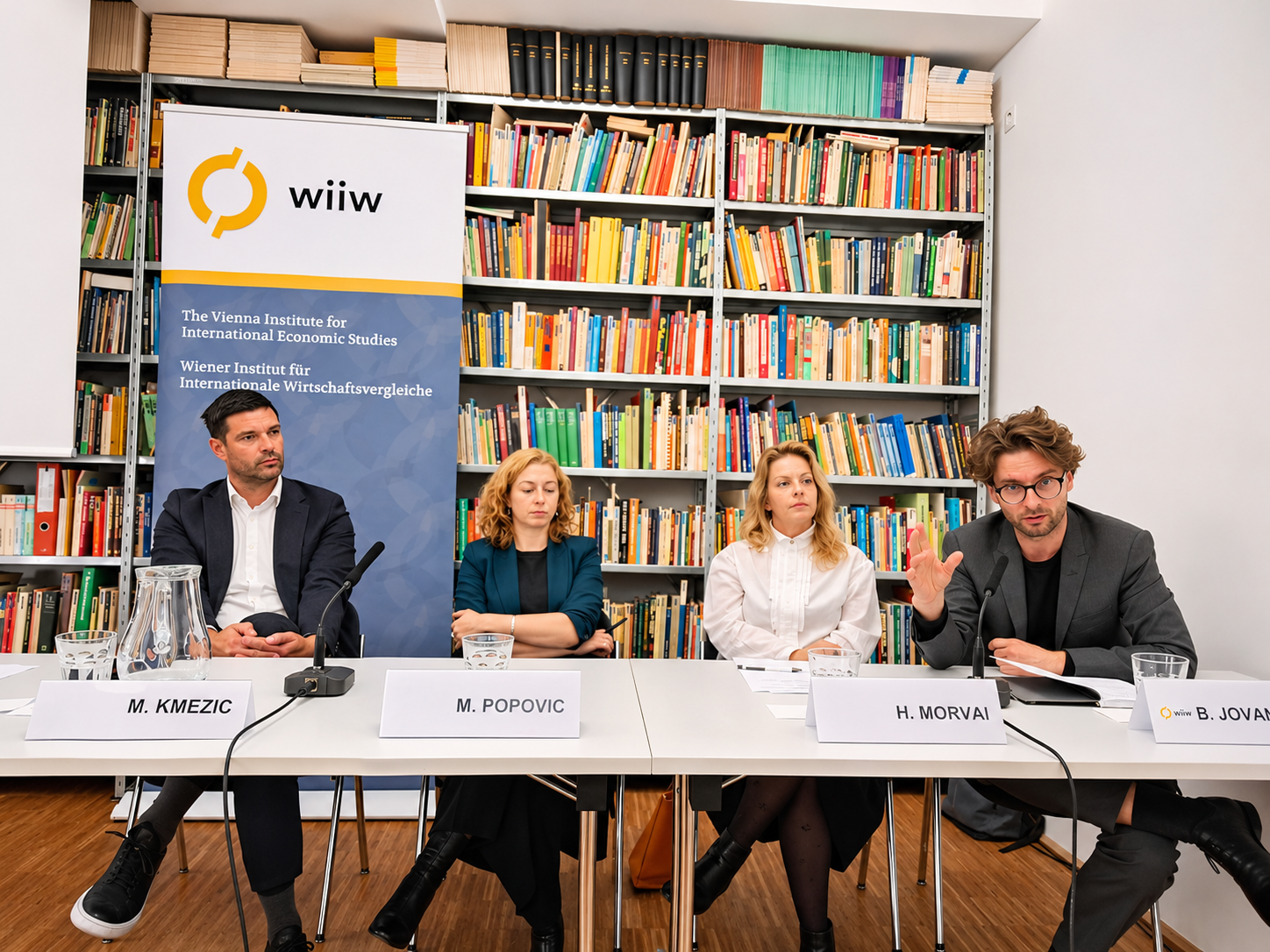
wiiw/Andreas Knapp
Kmezić described a system in which political loyalty influenced access to public services. He also pointed to the rising cost of the Morava Corridor, a 112-km-long motorway project in central Serbia. Popović highlighted close links between economic elites, organised crime, and the state.
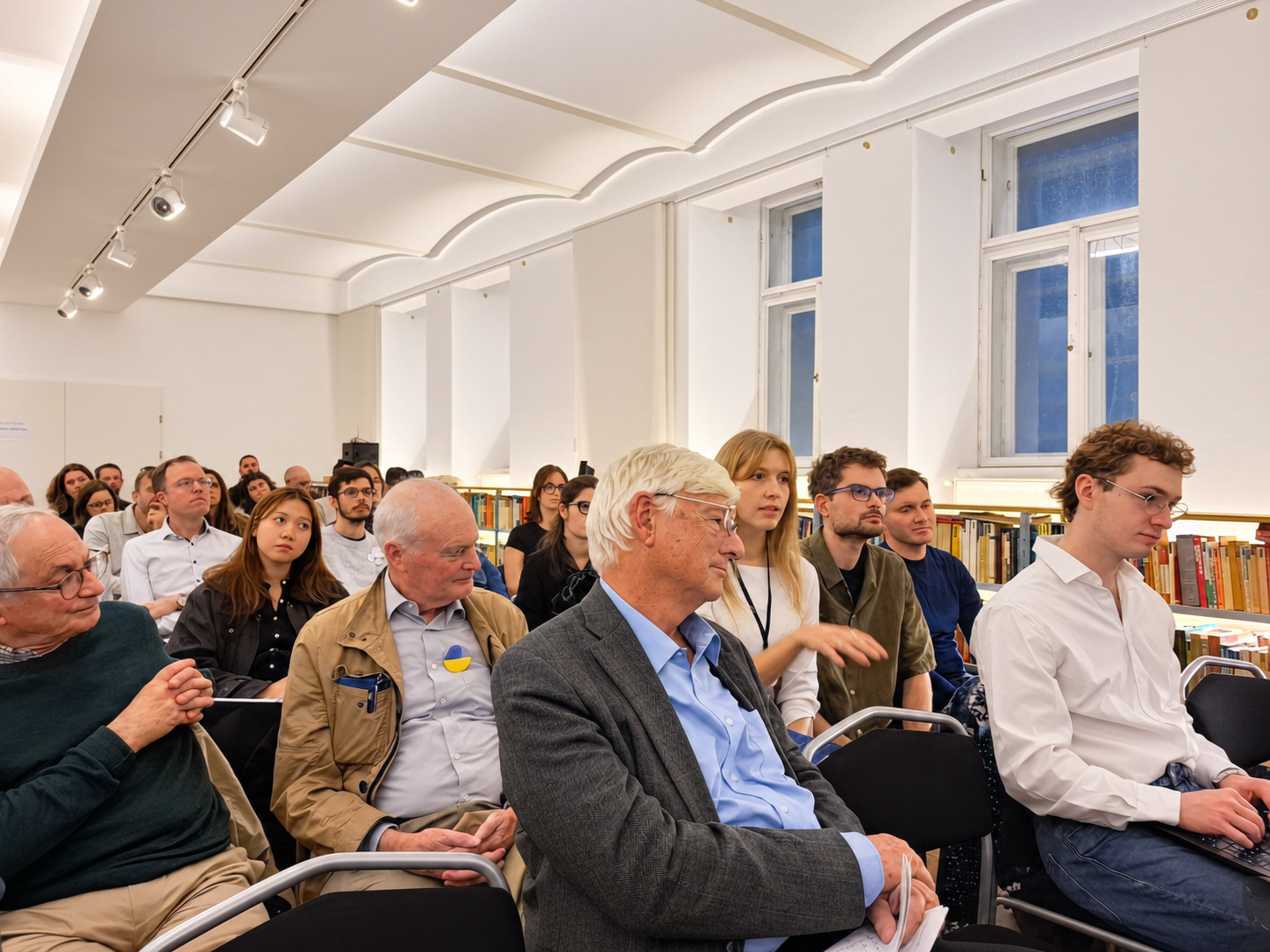
A question from the audience brought the discussion to a controversial mining project in Serbia. Kmezić argued that concerns about copper mining in Bor centred on corruption and inadequate environmental safeguards, which he said had contributed to severe pollution in the area.
Europe’s fading appeal
The discussion also revealed the distance between the aspirations of young Serbians and their expectations of the EU.
According to Morvai, many had lost hope of membership in the foreseeable future. Their immediate priorities were media freedom, democratic rights, and functioning institutions – the foundations of a country in which they could imagine staying rather than leaving.
Kmezić criticised what he saw as the European Commission’s vague stance towards Serbia, arguing that it had unsettled even committed supporters of EU integration. Morvai made the point even more forcefully, saying that, in her experience, most people in Serbia no longer believe that the country will join the EU. Having followed Serbia’s accession process from the outset in her professional work, she admitted to sharing their scepticism.
Winning the vote, changing the system
Before the vote, Morvai questioned whether the contest could be free and fair given Vučić’s overwhelming television presence. Television remains the main source of information for many voters, while the student movement mainly relied on social media in the run-up to the election. She also warned that a prolonged period of uncertainty was to be expected after the election.
Popović warned of possible violent confrontations and questioned which policies the student electoral list would pursue if successful. One possibility, she suggested, was calling for a new election once fair conditions had been established.
Although he considered a student victory possible, Jovanović cautioned that the movement might need support from smaller parties to form a government. With 140 seats in parliament, however, the Student List can form a government without coalition partners. Jovanović also suggested that the movement could encourage young people elsewhere to challenge entrenched political power.
Kmezić outlined two possible paths: deeper authoritarianism or the gradual rebuilding of democratic institutions alongside renewed engagement with the EU.
The Student List’s parliamentary majority gives the movement a chance to act on the demands that brought protesters onto the streets. The task now is to turn that mandate into accountable government and rebuild trust in public institutions.
wiiw/Andreas Knapp