Ukrainian refugees – from emergency to long-term strategy
23 January 2026
Nearly four years after Russia’s full-scale invasion of Ukraine, Europe needs to replace temporary arrangements with sustainable, long-term strategies that work for both refugees and host countries
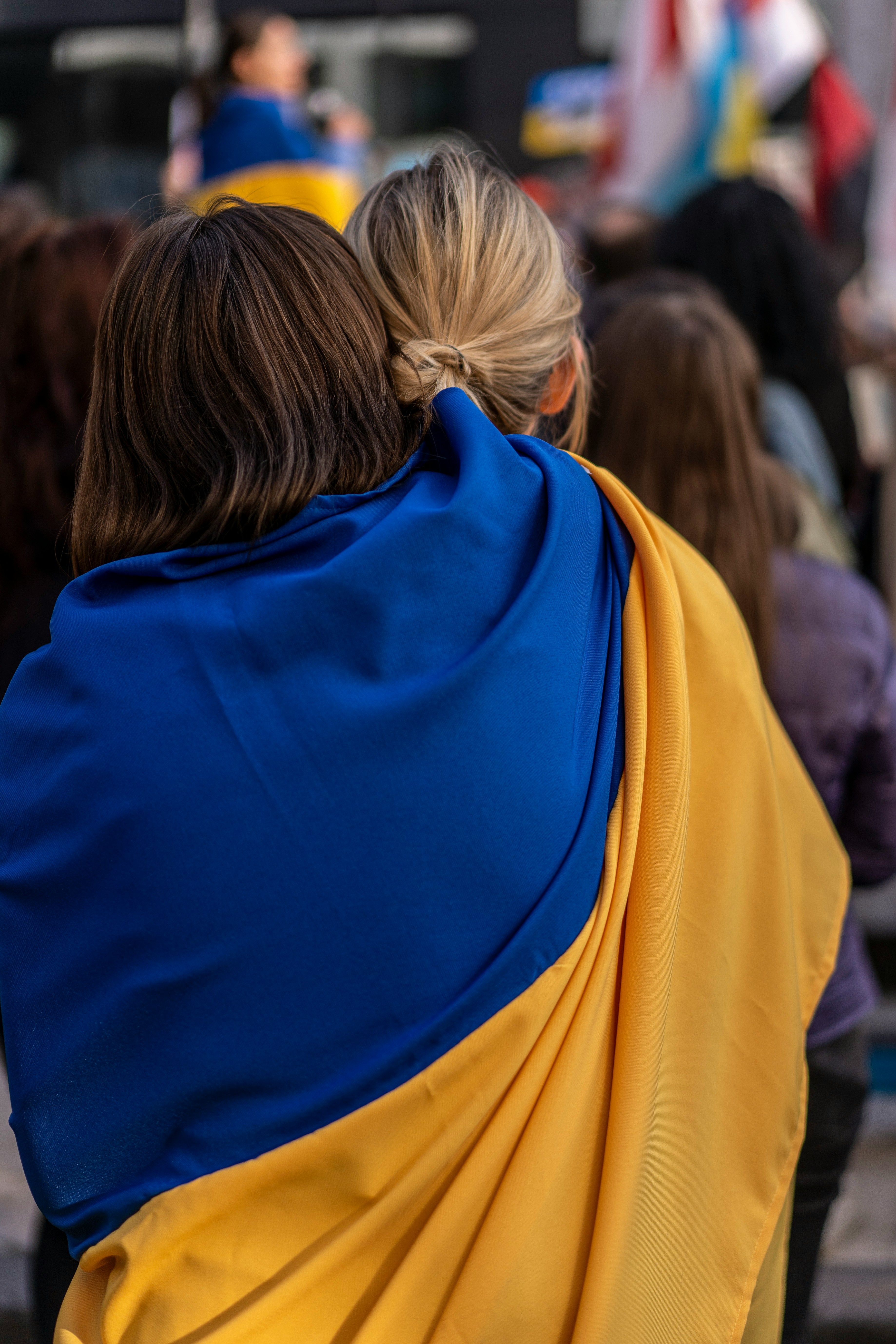
image credit: unsplash.com/Anastasiia Krutota
Disclaimer: The views expressed in this article are exclusively those of the authors and do not necessarily represent the official view of wiiw.
According to UNHCR, more than 6 million Ukrainians remain abroad, most of them in Europe.1 The EU’s immediate response to the Ukrainian refugee crisis was remarkable. In March 2022 it activated the Temporary Protection Directive, giving Ukrainians immediate access to residence, work, education and healthcare. By avoiding the long and uncertain asylum procedures that usually define European migration policy, the EU showed how much can be achieved when political consensus is strong. This swift action also allowed many Ukrainians to enter the labour market quickly. Eurostat-based analyses indicate that employment rates among working-age Ukrainians are considerably higher than among other refugee groups that have arrived in the EU in recent years, ranging from around 11% in some countries to over 50% in others. This reflects both an effective policy framework and the determination of the Ukrainian refugees themselves.2
Yet this should not obscure the reality that many of the Ukrainian refugees are underemployed and many are working in jobs below their level of education or professional experience, with qualified nurses employed as assistants and engineers taking up low-skilled positions.3 Overqualification is a common feature of refugee integration everywhere, as displaced people often accept jobs below their skill level simply to secure an income and stability. In the case of Ukrainians, however, the scale of this is unusually large. Surveys show that nearly 70% of Ukrainian refugees hold a university degree or equivalent qualification, compared to roughly 30% of Syrian or Afghan refugees in Europe.4 The mismatch between education and employment helps explain why so many Ukrainians remain in positions that are well below their level of training, despite their relatively rapid entry into the host- country labour markets.
The reasons for underemployment are varied. Childcare is often difficult to secure; recognition of qualifications can take years; and language barriers remain a daily obstacle. Public opinion, while still broadly supportive, is beginning to fray. Civil society initiatives and strong local engagement sustained a welcoming environment in the early stages; but housing shortages, crowded classrooms and competition in sections of the labour market are now increasingly creeping into the political debate. These pressures underline the fact that the challenge of integration is no longer about emergency reception, but about ensuring long-term sustainability.
POLAND AND GERMANY: TWO CONTRASTING EXPERIENCES
Behind the general trends lie very different national experiences. Poland illustrates both the magnitude of the challenge and the depth of solidarity. A million Ukrainians are still registered under temporary protection there – the largest number per capita in any EU country, according to UNHCR.5 For many, Poland was the natural first destination, shaped by geographical proximity, linguistic familiarity and existing family or community ties. Local authorities, non-governmental organisations and households bore much of the initial burden, offering accommodation and support on an unprecedented scale. Over time, however, that very scale has placed mounting pressure on housing, education and public services.
Poland’s experience reflects the social and logistical pressures that come with large-scale reception. Meanwhile Germany’s story highlights how a strong focus on labour-market integration can turn an emergency response into a more sustainable path forward. It now hosts nearly 1.2 million Ukrainians under temporary protection.6 Employment rates have risen steadily, as refugees have entered sectors that face acute labour shortages, such as healthcare, education and social services. In mid-2024, the employment rate of Ukrainian refugees was around 27%.7 Special language and training programmes have helped many to find work, though some barriers do remain: qualifications are not always recognised, and a sizeable share of the refugees are still working at below their skill level.
The lessons from Poland and Germany point in contrasting directions. Poland shows how crucial community mobilisation can be in the first months of displacement, but also how quickly local capacities can become overwhelmed without stronger European support. Germany shows that longer-term success depends less on emergency reception and more on building effective pathways into the labour market, with recognition of qualifications, vocational training and family support proving decisive. Taken together, these experiences suggest that solidarity and integration must go hand in hand: early generosity needs to be backed by sustained investment, if Europe is to turn temporary protection into lasting opportunity.
CHALLENGES AHEAD
Looking ahead, the greatest challenge is the uncertain horizon of return. Surveys suggest that most Ukrainians abroad still hope to go back home one day, but only a small proportion plan to do so in the near future.8 Families are caught between waiting for safe conditions in Ukraine and needing to build stable lives where they are now. At the same time, the support systems in host countries are under strain. What is manageable in the first year of a crisis becomes harder to sustain over time. Without clearer strategies, Ukrainians risk remaining in limbo – not fully integrated abroad, yet unable to return. This comes at a cost for both the refugees themselves and the societies that host them.
Europe now needs to move beyond the emergency response and think in terms of longer-term settlement, while still recognising that many Ukrainians will hope to return one day. This will require practical measures. Refugees need more rapid recognition of their qualifications and access to retraining, so that their skills are not wasted. Families, especially single mothers, need reliable childcare, so that they can work and build a stable life. Language courses and opportunities to connect with the local community are equally important, since they reduce isolation and help people participate more fully in society. Even for those who eventually do return to Ukraine, these skills and networks will be invaluable, strengthening the country’s ties with the EU. At the same time, the Temporary Protection Directive has shown the value of collective action at the EU level; but it was never meant to be permanent. If the Union wants to avoid fragmented national approaches, it will need to coordinate funding and develop more consistent integration policies across the member states.
The initial response to the war showed Europe at its best, with governments and citizens mobilising quickly to help. The next stage will be more difficult, as maintaining that solidarity and turning it into policies that work over the long term may prove challenging. If done well, the Ukrainian refugee crisis could offer a shining example of how displacement can strengthen both the countries that host refugees and the refugee source countries themselves, once people eventually return. If handled poorly, the whole exercise could lead to fatigue, frustration and wasted potential. The guiding principle should be clear: plan as though many refugees will stay, but keep the door open for those who wish to go home. Such a balanced approach offers the best chance of turning a crisis into something that ultimately leaves both refugees and host societies stronger.
Footnotes:
1 https://www.unhcr.org/us/emergencies/ukraine-emergency
2 https://assets.eurofound.europa.eu/f/279033/fe2e019347/ef23030en.pdf
3 https://www.oecd.org/content/dam/oecd/en/publications/reports/2023/01/what-we-know-about-the-skills-and-early- labour-market-outcomes-of-refugees-from-ukraine_e95955bf/c7e694aa-en.pdf
4 https://www.german-economic-team.com/en/newsletter/a-survey-of-ukrainian-refugees
5 https://data.unhcr.org/en/situations/ukraine/location/10781
6 https://ec.europa.eu/eurostat/statistics-explained/index.php?title=Temporary_protection_for_persons_fleeing_Ukraine_-_monthly_statistics
7 https://doku.iab.de/forschungsbericht/2024/fb1624en.pdf
8 https://euaa.europa.eu/sites/default/files/publications/2025-09/2025_09_EUAA_Ad_hoc_Report_Ukraine_EN.pdf