What would an accelerated EU enlargement mean and how feasible is it?
13 January 2026
EU enlargement is back on the agenda. This time, however, amid growing geopolitical pressures, the EU is exploring ways to speed up the process. But what is realistically achievable? A high-ranking panel with oiip addressed this question
image credit: wiiw/Andreas Knapp
Can accelerated EU enlargement work? In the face of growing geopolitical adversity and increasing global economic pressures, many experts believe that the EU should stabilise its immediate neighbourhood in the east and southeast with a faster round of enlargement. Given the current situation, this would naturally encompass Ukraine and Moldova, as well as the Western Balkans. But considering the uncertainty over the Ukraine peace negotiations and how war will end, the candidate states’ own complicated situations, and the many legal and bureaucratic hurdles of the EU accession treaty, can this even be a realistic prospect? And if so, what should the EU focus on?
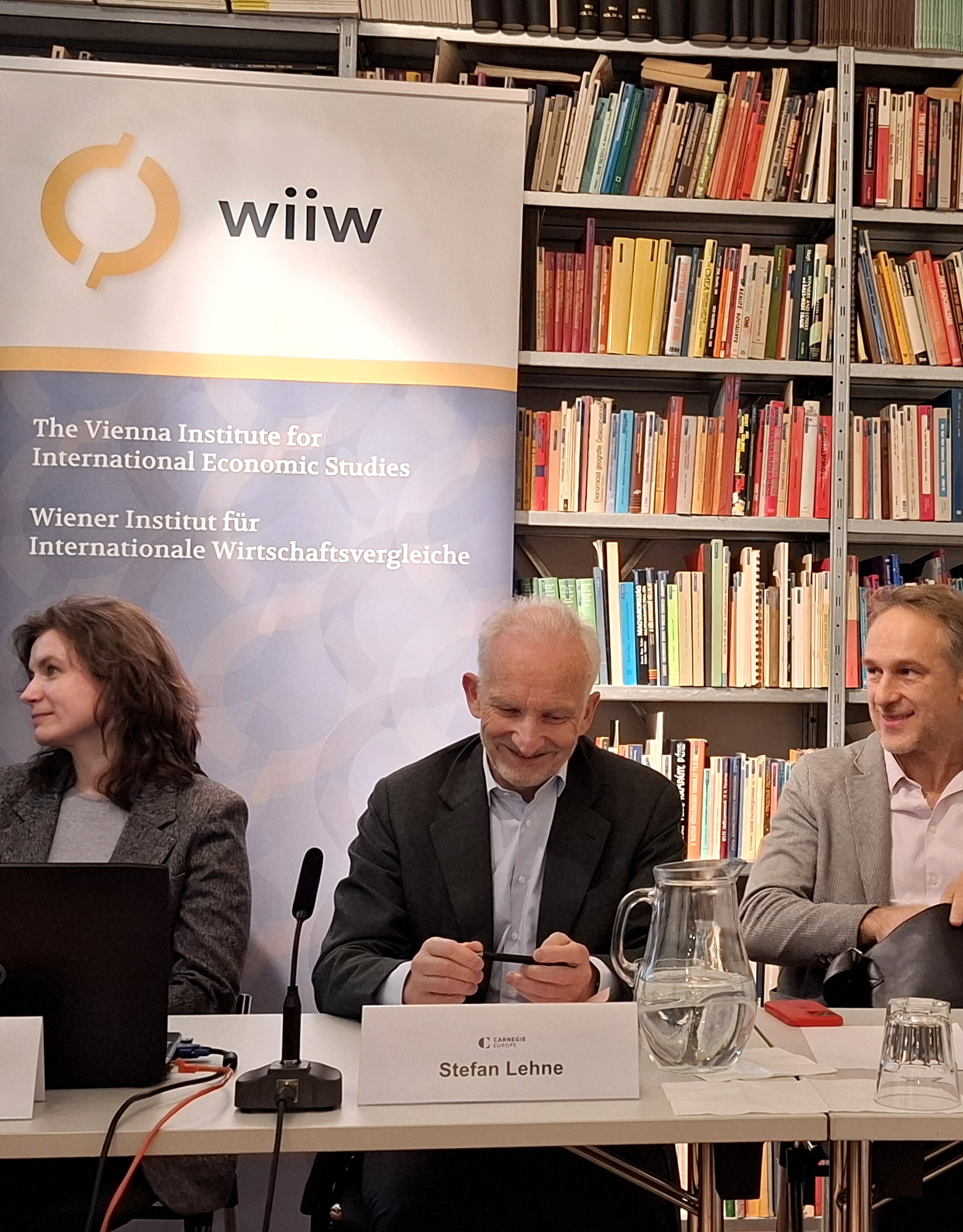
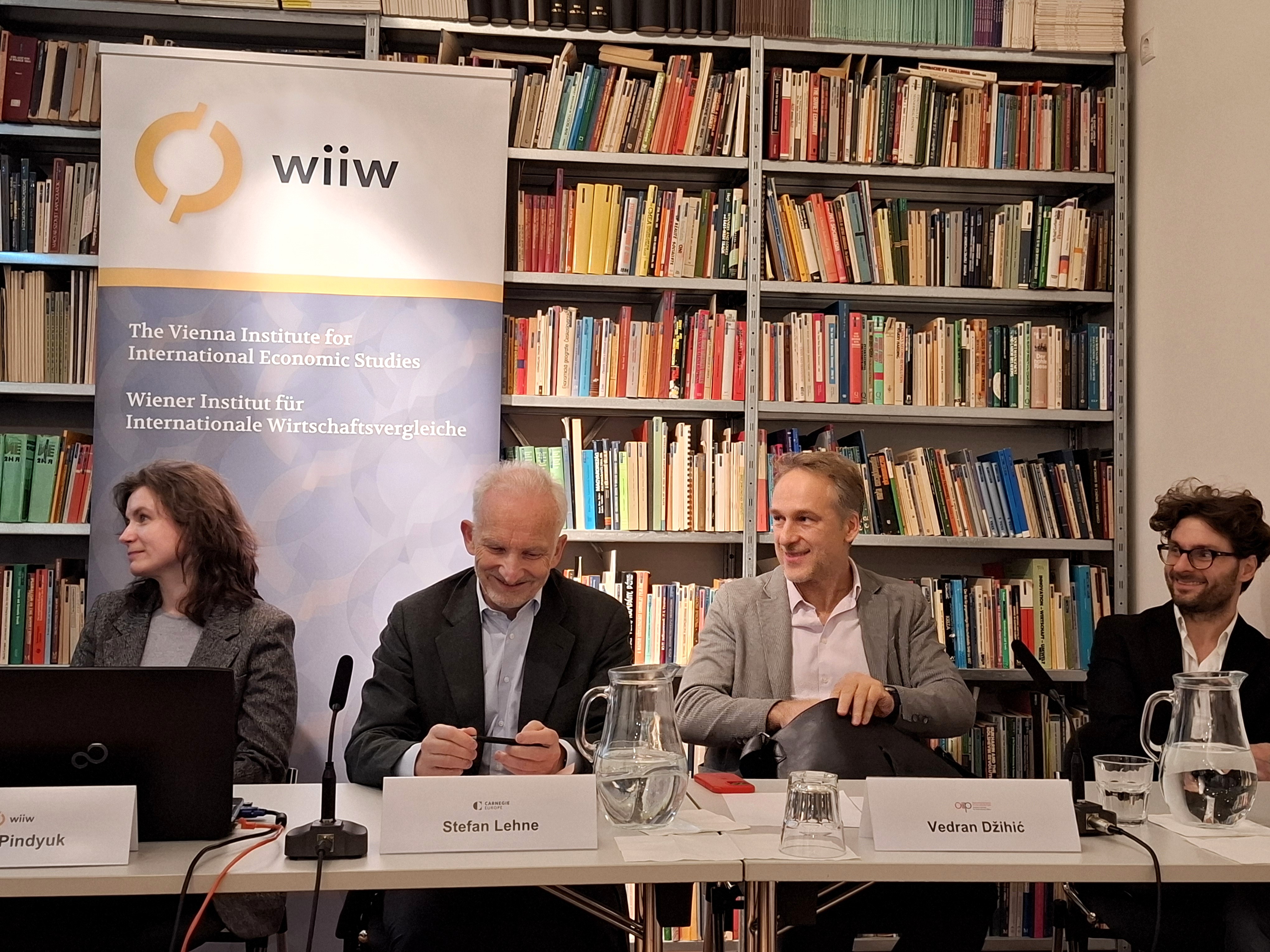
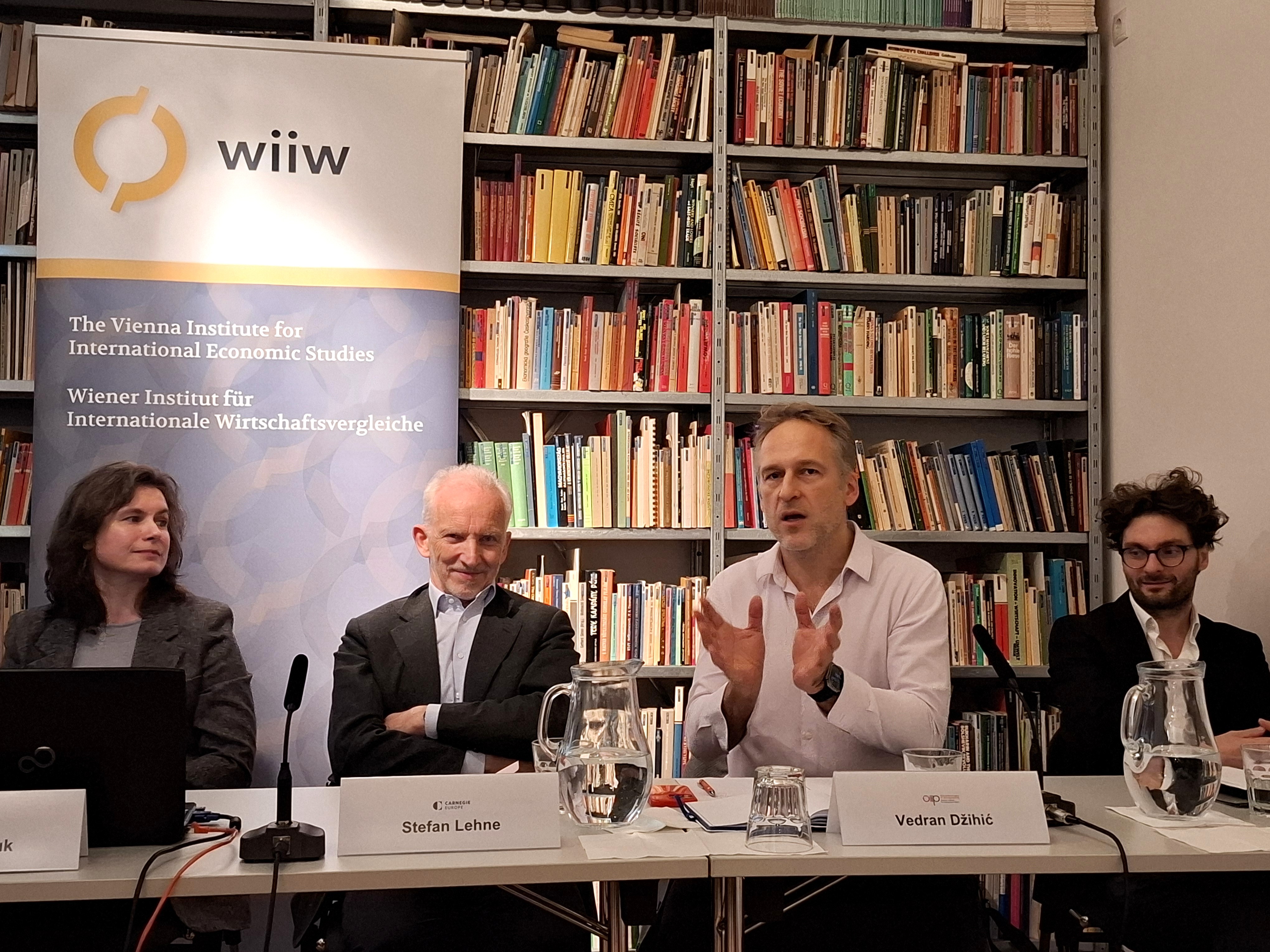
While the EU member states strive to find an answer to this conundrum, there may be a faster, more accessible solution in the meantime: gradual integration – in other words, partial accession. This was the key message from the panel discussion “Europe in a Fragmented World: Geo-economic and Geo-political Dynamics”, organised jointly by the Vienna Institute for International Economic Studies (wiiw) and the Austrian Institute for International Affairs (oiip), on 4 December, at the wiiw premises. The discussion analysed geopolitical and geoeconomic trends and their impact on Europe’s future from an interdisciplinary standpoint. The panellists, Stefan Lehne (Carnegie Europe), Vedran Džihić (oiip), Michael Landesmann (wiiw), Branimir Jovanović (wiiw) and Olga Pindyuk (wiiw), weighed in on the subject.
credit: wiiw
Before delving into more political matters, the panel first addressed the economic situation in the region, with Michael Landesmann presenting a brief overview of wiiw’s latest study on the key reforms needed for an accelerated EU enlargement. As such, four categories were singled out under the Copenhagen accession criteria: competitiveness, fiscal policy, labour markets, and institutions. Prioritising these categories pre-accession would help to avoid issues post-accession. According to Landesmann, the EU overwhelmingly focuses on negative spillover effects, and the ever-recurrent question “how much will it cost?” dominates public discourse. However, the proper and efficient use of EU funding could generate positive spillover effects, such as higher economic growth and stronger human capital, as well as progress in the areas of defence and critical minerals, Landesmann notes.
With respect to Ukraine, Olga Pindyuk’s message was very clear: “Ukraine is not a charity case for Europe”. Arguably, Ukraine has very serious economic challenges to overcome, mainly very low FDI and a low level of complexity in its economy, i.e. an uneven economy with a lack of cohesion. In addition, high public debt remains a major concern and macro-financial stability must be considered over the long run. Yet here too, Pindyuk argues that there may be a silver lining. Ukraine has comparative advantages and potential benefits for the EU in several key sectors, such as IT, metals, renewable energy, the above-mentioned defence and critical minerals sectors, and also agri-food (although this last point is strongly contested). Ukraine has also made significant progress in the digitalisation of its economy. Pindyuk further explains that, as the result of war, the country has seen the downfall of its oligarchs and that the increasingly strong civil society is galvanising societal reforms. The latest corruption scandal in late 2025 involving President Zelensky’s former chief of staff, Andrii Yermak, has unfolded in a transparent fashion, rather than being concealed like previous scandals, signalling that, in Pindyuk’s words, the “sticks and carrots of the EU Commission do work”.
credit: wiiw
Regarding the Western Balkans, which have arguably already waited in line for a long time, Landesmann points out that the returns on EU economic convergence have been rather meagre. Furthermore, tight fiscal policies in the region restrict manoeuvres, a point echoed by Branimir Jovanović, economist and expert on the Western Balkans at wiiw. Jovanović notes that, unlike Ukraine, the Western Balkans have been quite good at attracting FDI and their general outlook is positive, with quite a stable macroeconomic situation. The issue here is a lack of competitiveness, coupled with a dire need for better industrial policy. The biggest obstacle for EU accession, however, is the rise of authoritarianism and the downgrading of institutions across the region, particularly in the case of Serbia and its president, Aleksandar Vučić. Bosnia and Herzegovina is experiencing a standstill, owing to a constitutional crisis. While the situation looks quite promising for Montenegro and Albania, which stand to join the EU by 2030, Jovanović is less optimistic for the rest of the Western Balkans. He argues that accelerated enlargement can only work if the same treatment is applied to all states in the region, with no blatant EU favouritism.
What is Brussels’ take on this debate? Stefan Lehne, who served the General Secretariat of the Council of the European Union as director for the Balkans, Eastern Europe and Central Asia, argues that Montenegro and Albania are first in line because EU accession is a realistic prospect in their case, rather than as a result of EU favouritism. Indeed, Lehne’s contribution to the panel served as a reality check for the situation on the ground. Despite their favourable standing, Albania has a worrying concentration of power and Serbia’s President Vučić could still create instability in Montenegro. Although the EU Commission is serious about working with Ukraine and Moldova, the plan entails risks. Moldova is grappling with Transnistria, and the end of the war in Ukraine is still uncertain. To complicate things further, the EU accession treaty and certain EU provisions represent challenges in their own right. Discussions are ongoing as whether to move some interim steps of the accession treaty (mainly those in the middle of the negotiations) to approval by a qualified majority. At present, however, Lehne explains that “the crucial ingredient” to help candidate states, and to alleviate pressure on EU member states, is gradual integration. Partial accession could have a major positive impact in the region, giving candidate states access to EU funds and the EU budget. However, a lot still needs to be done to change European mentalities and perspectives on enlargement.