Winter forecast for Eastern Europe: Solid growth despite uncertainties
04 February 2026
Structural change in Central and Eastern Europe is in full swing, while Trump, budget deficits and a dictated peace in Ukraine pose risks; Ukraine faces a difficult future, whereas Russia’s economy is stagnating
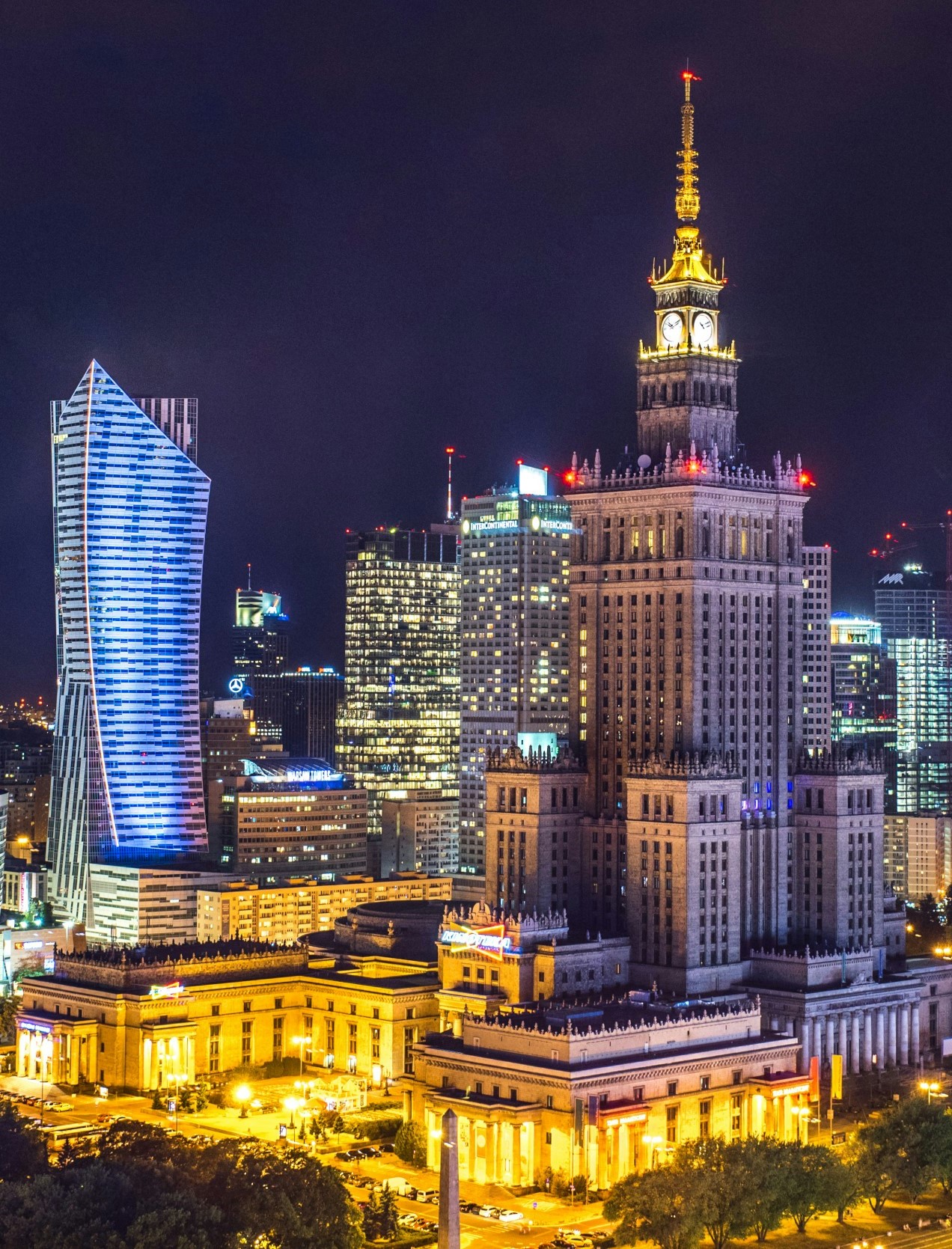
image credit: unsplash.com/Kamil Gliwinski
Even though US President Donald Trump continues to cause turmoil and the international environment remains difficult, most economies of Central, East and Southeast Europe are showing solid growth. However, the EU members of the region will continue to perform at below their potential. The continued weakness of industry in Germany, high budget deficits and structural problems are all weighing on growth for some of them. Both Russia (the aggressor) and Ukraine (the victim) are facing economic difficulties, though for very different reasons. These are the main findings of the new winter forecast by the Vienna Institute for International Economic Studies (wiiw) for 23 countries of the region.
Structural change is taking place in the Eastern member states of the European Union. ‘The main driver of growth there has been private consumption as a result of strong real wage increases. This is losing momentum, with private and public investment gaining in importance,’ says Richard Grieveson, Deputy Director of wiiw and lead author of the winter forecast. ‘In view of the acute loss of competitiveness in Central Eastern Europe’s export-oriented industry due to a steep rise in unit labour costs, the previous model of success as an extended workbench for Western corporations is increasingly undermined. Investment in greater productivity is therefore urgently needed.’
In principle, the region is benefiting from the sharp rise in defence spending by NATO members there. ‘However, significant growth momentum can only be expected if a larger proportion than before is invested in the procurement of weapons and equipment, and if these goods are also produced locally, rather than being imported from the United States and other third countries, such as South Korea,’ says Grieveson.
For 2026, wiiw forecasts average growth of 2.6% for the EU members of the region, which is the same as was expected last autumn. Growth is also likely to be similarly high in 2027, at 2.7%. Compared to the autumn forecast, this represents a slight upward revision of 0.2 percentage points for 2027. Despite some difficulties, these countries are likely to grow almost twice as fast as the euro area both this year and next (2026: 1.4%; 2027: 1.5%). Poland is once again the growth leader among the Eastern EU member states, both this year (3.7%) and next (3.2%), followed by Lithuania (2026: 3%) and Croatia (2026: 2.8%). In Hungary, where the landmark parliamentary election due to be held in April could cost Prime Minister Viktor Orbán his post, the economy is picking up again after stagnating last year (2026: 2.2%; 2027: 2.5%).
The six countries of the Western Balkans are expanding at a comparatively rapid rate (2026: 3.1%; 2027: 3.5%), even though Serbia’s forecast has been revised downwards on account of the ongoing protests. Things are also going quite well in Turkey, which is expected to grow by 3.9% this year and 4.4% next year.
By contrast, the outlook for war-torn Ukraine continues to deteriorate. For 2026, wiiw expects growth of 2.5%, a further downward revision of 0.5 percentage points on the autumn forecast. Economically, too, much will depend on the form of Western security guarantees in the wake of a possible peace agreement. In the case of aggressor Russia, near-stagnation will continue both this year (1.2%) and next (1.5%), due to high interest rates, low oil prices and meagre investment.
Trump, high budget deficits and a dictated peace in Ukraine as downside risks
The biggest downside risk to the forecast is further disruption from new US trade policy measures initiated by Donald Trump. These could have an adverse impact on exports. ‘Although direct trade flows between the US and Central Eastern Europe are negligible, lower US demand for European industrial products due to further tariffs on imports from the EU could indirectly drag the region down, as it is closely intertwined with Western European industry,’ explains Richard Grieveson.
Added to this are the high budget deficits in some countries, particularly Romania, Hungary, Poland and Slovakia, which could force them to implement growth-dampening austerity measures in the event of turmoil on the bond markets. Romania is already having to pursue such a policy.
A dictated peace in Ukraine in favour of Russia could also have a negative impact on the region. ‘The lack of credible security guarantees for Ukraine is likely to deter investors and lead to considerable uncertainty, as Moscow can be expected to destabilise the entire region in this event,’ warns Grieveson.
Ukraine faces a difficult future
The Russian escalation of attacks on Ukraine against the backdrop of ongoing negotiations is increasingly affecting the country economically. For 2026, wiiw forecasts growth of 2.5% for Ukraine, a downward revision of 0.5 percentage points compared to the autumn. The huge destruction of energy infrastructure caused by massive Russian air strikes and the resultant widespread power outages are increasingly undermining economic activity in the country. Added to this are the loss of those production facilities that have been destroyed and the rampant labour shortage caused by emigration and military mobilisation.
In its forecast, wiiw assumes that the war will continue until 2028 despite the current negotiations, though a political solution is still possible in the meantime. ‘Economic recovery and reconstruction will depend entirely on whether the West provides Ukraine with credible security guarantees,’ says Olga Pindyuk, Ukraine expert at wiiw. ‘If the security guarantees are watertight, that could lead to an economic boom throughout the region. Otherwise, foreign investors will probably think twice about investing in Ukraine, which means that not enough private capital will flow into the country for reconstruction and a sustainable economic upturn.’
Even with firm security guarantees, however, recovery after the war is likely to be difficult – despite the fact that in this case Ukraine would probably be integrated more rapidly into the EU, with all the positive effects that would bring. In its new forecast, wiiw has taken a more detailed look at the prospects for recovery after the war. Its conclusion: even with a peace agreement favourable to Ukraine, the economic outlook for the country is not very bright. This is evident from historical examples: in most cases, a country has only been able to recover rapidly after a war if it already had strong economic growth and stable democratic institutions before the war; if the war did not last too long; if the economic slump during the war was limited; and if there was no resurgence of armed conflict.
‘Unfortunately, Ukraine does not fare particularly well on any of these points. This makes credible security guarantees, a meaningful prospect of EU membership and massive financial support for the country’s reconstruction all the more important,’ insists Pindyuk.
Russia in stagnation
A possible end to the war would also have an impact on the economy of aggressor Russia, which is currently stagnating. In the short term, the elimination of spending on soldiers’ wages and compensation for their families, which accounts for around 2% of GDP, could lead to a demand shock. In the medium term, however, the economy is likely to benefit from the easing or partial lifting of US sanctions. ‘Above all, renewed access to Western high technology for oil and gas production or aircraft engines would be of great importance for the Russian economy,’ says Vasily Astrov, Russia expert at wiiw.
For 2026, wiiw forecasts growth of just 1.2% for the country, a slight downward revision of 0.2 percentage points compared to the autumn. Next year, growth is likely to be similarly low, at 1.5%. However, these forecasts are based on the assumption that the war against Ukraine will continue and that there will be no easing of US sanctions.
‘The main reason for Russia’s current economic slump is the Central Bank’s restrictive monetary policy,’ explains Astrov. ‘With interest rates currently as high as 16%, borrowing has become expensive, which in turn is stifling economic activity. This is exacerbated by the low oil price, in combination with US sanctions against the energy sector and the far too low level of investment, which is likely to decline further.’ Astrov is convinced that low investment activity will probably damage the growth potential of the Russian economy in the longer term.