Autumn Forecast: Eastern Europe’s growth defies all odds
21 October 2026
EU members in the region with robust growth; CEE shifting towards a new economic model; Ukraine on the brink; Russia's economy struggling under the weight of war
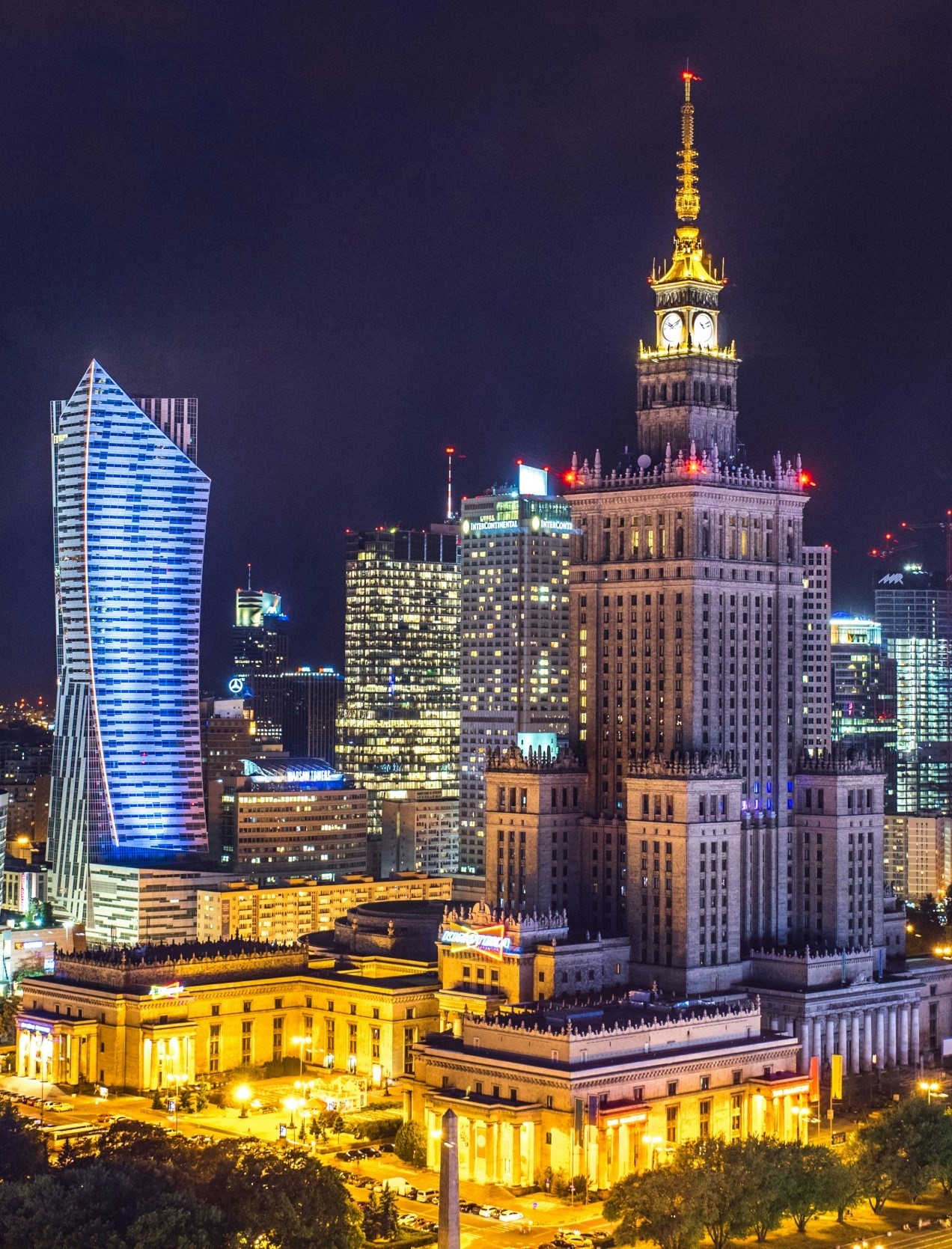
image credit: unsplash.com/Kamil Gliwinski
- EU members in the region are demonstrating robust growth
- Central and Eastern Europe is shifting towards a new economic model
- Ukraine’s war-battered economy is on the brink
- Russia’s economy is struggling under the weight of war and high interest rates
Despite the energy price shock triggered by the Iran war and the ongoing geopolitical turmoil, the economies of Central, East and Southeast Europe are proving remarkably resilient. However, the trend is divided and highly country specific. This is shown by the new autumn forecast of the Vienna Institute for International Economic Studies (wiiw) for 23 countries of the region.
While some countries, such as Romania and Slovakia, are struggling with large budget deficits and the weakness of the German automotive industry, Poland, Kazakhstan and the Western Balkan countries are booming. By contrast, almost five years into the war, the economies of both Russia and Ukraine are barely growing at all.
Towards a new economic model
Meanwhile, the eastern EU member states are undergoing a fundamental transformation of their growth model – moving away from their traditional role as low-cost manufacturing hubs for Western industrial companies, towards an economic model driven by higher-value-added products and services, strong private consumption and public investment.
‘Countries that invest in technology and productivity – for example, through automation and digitalisation – stand a good chance of continuing to prosper economically. Poland and, to some extent, Czechia are showing the way,’ says Richard Grieveson, Deputy Director of wiiw and lead author of the forecast. He points to Poland’s high-tech industry, which has grown by around 40% over the past decade.
However, the region is unlikely to benefit as much from Germany’s slow economic recovery as it has in the past. This is because growth in Germany is now increasingly driven by defence and infrastructure spending, rather than by the traditionally dominant automotive and machinery industries – sectors in which Central and Eastern European economies are much more deeply integrated. ‘Investment in Central and Eastern Europe’s defence industry and the inflow of EU funds are, however, providing a significant boost to economic growth,’ says Grieveson.
The EU’s tougher stance in its trade dispute with China is also having an impact. On the one hand, greater EU protectionism could provide some breathing space for industries in the region, particularly the automotive sector, which is closely integrated with German industry and faces fierce competition from China. On the other hand, Chinese direct investment and imports of intermediate goods from China are likely to become more difficult and costly.
All in all, wiiw forecasts average growth of 2.2% for the eastern EU member states in 2026 – no change from its summer forecast. In 2027, growth is expected to pick up slightly to 2.5%, which represents a minor upward revision of 0.1 percentage points. Consequently, the EU countries in the region are likely to grow at more than double the rate of the euro area both this year and next (2026: 0.9%; 2027: 1%) and should be able to continue their economic catch-up process.
Romania is a notable exception, as it will experience a slight recession (-0.4%) this year owing to its strict fiscal austerity. Poland is once again the growth leader among the eastern EU member states, with 3.7% this year and 3% next.
Hungary, which managed to shake off the authoritarian rule of long-serving Prime Minister Viktor Orbán in spring, is experiencing an economic revival and is set to grow by 1.7% this year and 2.6% in 2027. Noteworthy is the high level of confidence shown by investors in Prime Minister Péter Magyar’s new government, which is reflected in the sharp appreciation of the forint and the steep fall in yields on Hungarian government bonds.
The six countries of the Western Balkans are set to expand by an average of 3.2% in 2026 and 3.3% in 2027. Serbia, which goes to the polls on 25 October – when former President Aleksandar Vučić will seek to become prime minister – is expected to grow by 3.3% in 2026 and 3.4% in 2027. Turkey is also performing comparatively well, with projected growth of 2.9% this year and 3.5% next, although wiiw has lowered its forecast for both years by 0.4 percentage points.
Ukraine’s economy has its back to the wall
Ukraine’s economic situation, by contrast, is becoming increasingly critical. ‘Russia’s relentless air strikes and the resulting destruction of energy facilities, critical infrastructure and port facilities on the Black Sea, coupled with the blockade of its ports, are taking an ever-heavier toll on the economy,’ says Olga Pindyuk, Ukraine expert at wiiw.
wiiw has therefore downgraded its growth forecast for 2026 to just 0.6%, a downward revision of 0.4 percentage points from its summer forecast. For 2027, wiiw still expects growth of 2.1% (also 0.4 percentage points lower than previously forecast), but only if Ukraine continues to receive adequate financial and military support from abroad – something that appears increasingly uncertain.
‘The fifth winter of the war is likely to put Ukraine to a severe test. With its dwindling supplies of air defence missiles, the country is finding it increasingly difficult to defend itself against Russia’s growing barrage of ballistic missiles and drones. Faced with only limited military gains on the battlefield, Putin is now increasingly focusing on terrorising Ukraine’s civilian population,’ says Pindyuk.
The destruction of Ukraine’s export infrastructure is hitting the country’s vital agricultural sector particularly hard. In August, grain exports plunged by 70% compared to the previous month. The steel industry is also under severe pressure, with some plants forced to suspend production temporarily. Meanwhile, inflation remains high, at around 10%, prompting the National Bank of Ukraine to raise its key interest rate to 16%. This has pushed up borrowing costs for businesses and households, putting a further brake on economic growth.
The economic damage is also putting further strain on Ukraine’s already precarious public finances, as tax revenues fall and government spending rises. According to Ukraine’s Ministry of Finance, the country still faces a funding shortfall of around USD 33 billion for 2027.
Russia’s economy is struggling under the weight of war
Russia, the aggressor in the war against Ukraine, is also increasingly feeling the economic consequences of its invasion, with growth slowing to a crawl. For 2026, wiiw forecasts meagre growth of just 0.6%, followed by a modest recovery to 1.3% in 2027. wiiw has thus left its summer forecast for the country unchanged.
Ukrainian drone strikes on Russian oil refineries have triggered a severe fuel crisis across the country. According to estimates by the Russian Central Bank, the resulting shortages could push up inflation by 1.5 percentage points by the end of the year. This has prompted the Central Bank to put further interest rate cuts on hold for the time being, with its key rate currently standing at 14%.
‘The pause in monetary easing is inevitably hampering Russia’s economic recovery, as high interest rates weigh heavily on economic activity. Ukrainian drone strikes are therefore having a very tangible adverse impact on Russian growth,’ says Vasily Astrov, Russia expert at wiiw.
Fuel shortages have also forced the Russian government to impose export bans on petrol, diesel and jet fuel, preventing Moscow from fully capitalising on the surge in global fossil fuel prices triggered by the Iran war. ‘It therefore remains to be seen how much diesel Russia can actually supply to the world market under the deal between US President Trump and President Putin,’ says Astrov.
Western sanctions are also taking their toll, restricting access to high-quality capital goods such as machinery and undermining Russia’s long-term growth potential. Against this backdrop, fixed capital investment fell by around 10% in the first half of the year. ‘Weak investment in new production capacity is one of the biggest problems facing the Russian economy,’ says Astrov. Despite persistent labour shortages across many sectors, the economic slowdown is now also beginning to show up in a slight rise in unemployment – a development not seen for some time.
Meanwhile, the enormous cost of the war with Ukraine is placing an increasing strain on Russia’s public finances, with the budget deficit expected to exceed 3% of GDP in 2026. For 2027, the government is planning tax increases and spending cuts, although defence spending and social benefits are to be spared. ‘President Putin will have little difficulty in financing the war against Ukraine next year either. Russia’s public debt remains very low by international standards, and the government can continue to borrow from domestic banks,’ explains Astrov.