Central, East and Southeast Europe in 2027: Resilient growth in a more dangerous world
21 October 2026
The region continues to outperform Western Europe, but its traditional growth model is changing
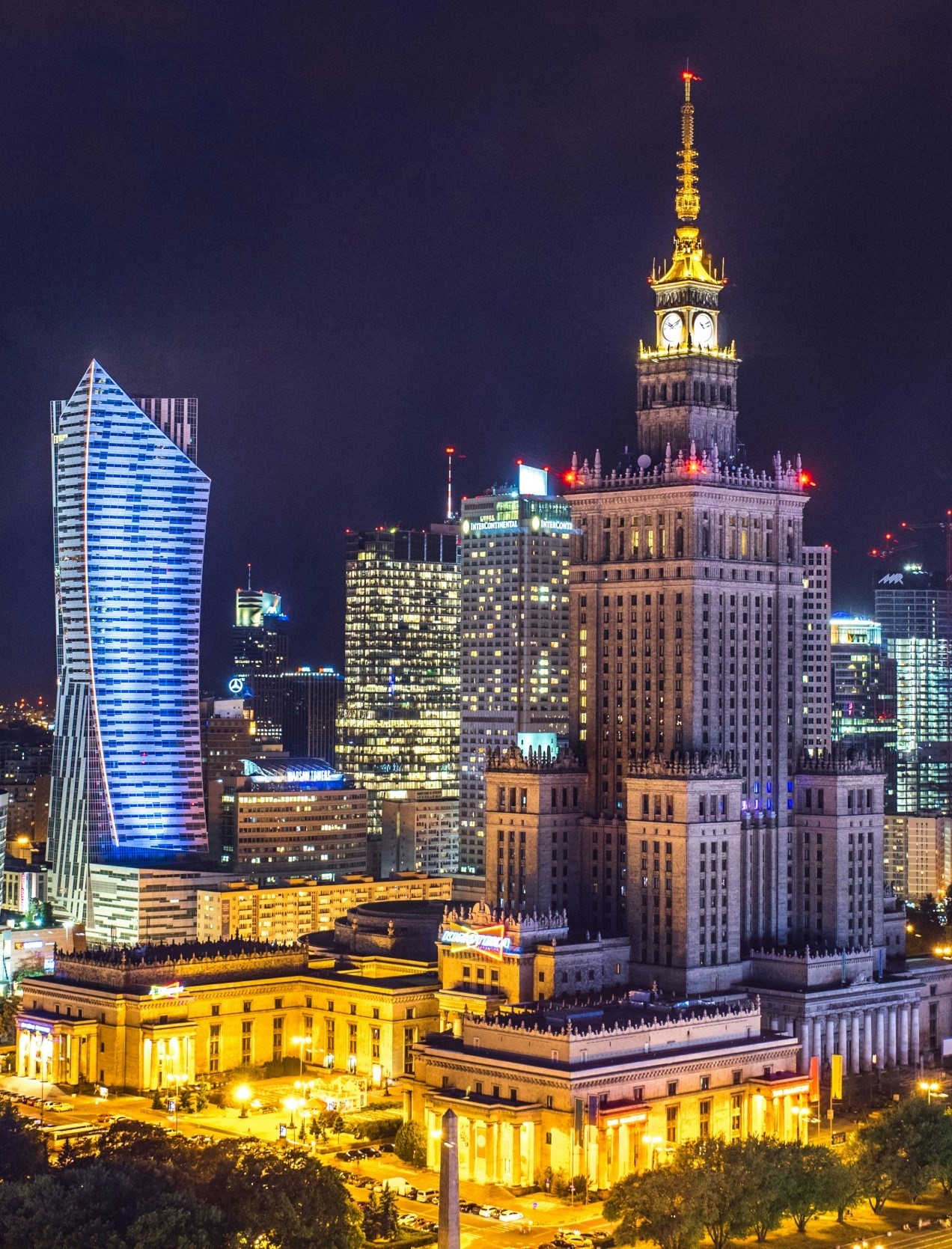
image credit: unsplash.com/Kamil Gliwinski
- Despite renewed geopolitical shocks and higher energy prices, wiiw's new Autumn Forecast shows that most economies in Central, East and Southeast Europe (CESEE) remain resilient and continue to outperform Western Europe. Poland is forecast to grow by 3.7% in 2026 and 3.0% in 2027, while Kazakhstan and parts of Southeast Europe will perform even more strongly.
- The region's traditional growth model, based on cheap labour, foreign investment and German industrial demand, is giving way to one increasingly driven by domestic demand, automation, higher-value manufacturing and investment in defence and energy.
- Our overall growth outlook for 2027 is broadly unchanged from the summer, but forecasts have been upgraded for the Baltic states and much of the Western Balkans, and downgraded for Ukraine, Moldova and Turkey. Inflationary pressures and fiscal constraints remain important risks.
The global environment has become more dangerous and more inflationary, with important implications for CESEE economies. The prolonged conflict in the Middle East and the disruption in the Strait of Hormuz have pushed up energy and other commodity prices, while Russia's war against Ukraine continues to undermine European security. Higher US tariffs, a more confrontational EU trade stance towards China and rising sovereign borrowing costs are adding to the uncertainty.
Geopolitics is increasingly reshaping Europe's economic model. Defence spending is rising as governments take more responsibility for their own security. Meanwhile, the EU is moving towards tougher measures against Chinese competition, including greater preference for European-made products. This may support some CESEE manufacturers, but it will also increase costs and complicate supply chains. The recent improvement in German manufacturing offers only limited reassurance: demand is being supported partly by defence, data centres and stockpiling, rather than traditional sectors such as automotive manufacturing, with which CESEE is closely integrated.
Against this backdrop, CESEE continues to demonstrate remarkable resilience. More than half of the region's economies are expected to grow faster in 2026 than their average since 2010. Poland, Kazakhstan and much of Southeast Europe will remain among the strongest performers in 2027, supported by domestic demand, investment and, in some cases, tourism and EU funds. Kazakhstan is forecast to grow by 4.7% in 2027, Kosovo by 3.8% and Albania by 3.7%. At the other end of the spectrum, Romania's fiscal adjustment will result in an economic contraction of 0.4% in 2026, while Slovakia is expected to grow by just 0.5%.
Our overall growth outlook for 2027 is broadly unchanged from the summer, but there have been important revisions at country level. Growth forecasts have been upgraded for Lithuania and Latvia, partly reflecting increased defence-related investment, and for most Western Balkan economies, which have proved more resilient than expected. Meanwhile, forecasts have been lowered for Ukraine, Moldova and Turkey. In Ukraine, intensified Russian attacks on civilian and economic infrastructure are severely constraining activity, with growth now forecast at just 0.6% in 2026 and 2.1% in 2027.
The energy shock has interrupted the disinflationary trend of recent years. Inflation forecasts for CESEE in 2027 have been revised upwards by an average of 0.2 percentage points. Central banks have generally paused rate cuts, and some have even raised rates. Although the current energy shock is far smaller than that of 2021–2022, persistently high gas prices pose a particular risk to household budgets. Private consumption remains an important growth driver, but slowing real wage growth suggests that its contribution will moderate.
Investment is increasingly central to the region's growth prospects. EU funding, higher defence expenditure and pressure on firms to automate and raise productivity offer important opportunities. There are encouraging signs that CESEE is adapting: Polish high-technology manufacturing output has risen by around 40% in real terms over the past decade, while similar sectors in Czechia and Hungary have also performed strongly. Yet fiscal constraints are tightening. Large deficits, higher bond yields and rising debt-service costs will force difficult spending choices, especially where defence budgets are protected.
The traditional CESEE growth model is giving way to something new. Cheap labour, high foreign investment inflows and strong German industrial demand can no longer be taken for granted. The countries and firms best placed to succeed will be those able to mobilise investment, raise productivity, move into higher-value activities and manage the growing energy, fiscal and geopolitical risks. The region's growth potential remains considerable, but the differences between individual countries and sectors will matter more than ever.
The full wiiw Autumn Forecast provides detailed economic projections for 23 CESEE economies through to 2028, including growth, inflation, investment and fiscal developments, alongside an assessment of the main risks and opportunities. The full forecast report is available for wiiw members here. The Executive Summary and country reports for Lithuania and Serbia are free to download.